
Families on shelter waitlists face challenges, find support with schools and nonprofits
For one mother, home was whatever came next: a motel room this week, a shelter bed the next, never more than a few days of certainty at a time.
I used her story as the throughline for a piece on the human cost behind Massachusetts' emergency shelter waitlist — thousands of families, many recently arrived from Haiti, stuck in limbo while the state scrambled to keep up. Working with a translator from a local NGO, I interviewed migrant families directly to document what waiting actually looks like: the school disruptions, the transportation barriers, the constant low hum of not knowing where you'll sleep next. A whistleblower gave me the real numbers behind the state's public messaging — how many people were actually homeless in Boston, and how many families were sitting on the waitlist — numbers that hadn't been reported before. I paired that with interviews with nonprofit CEOs finding families interim shelter, legal experts, and policymakers, then built the data visualizations myself in Flourish to show the scale behind the individual stories.
Tags: Investigative Reporting · Housing Policy · Data Journalism · Cross-Cultural Interviewing
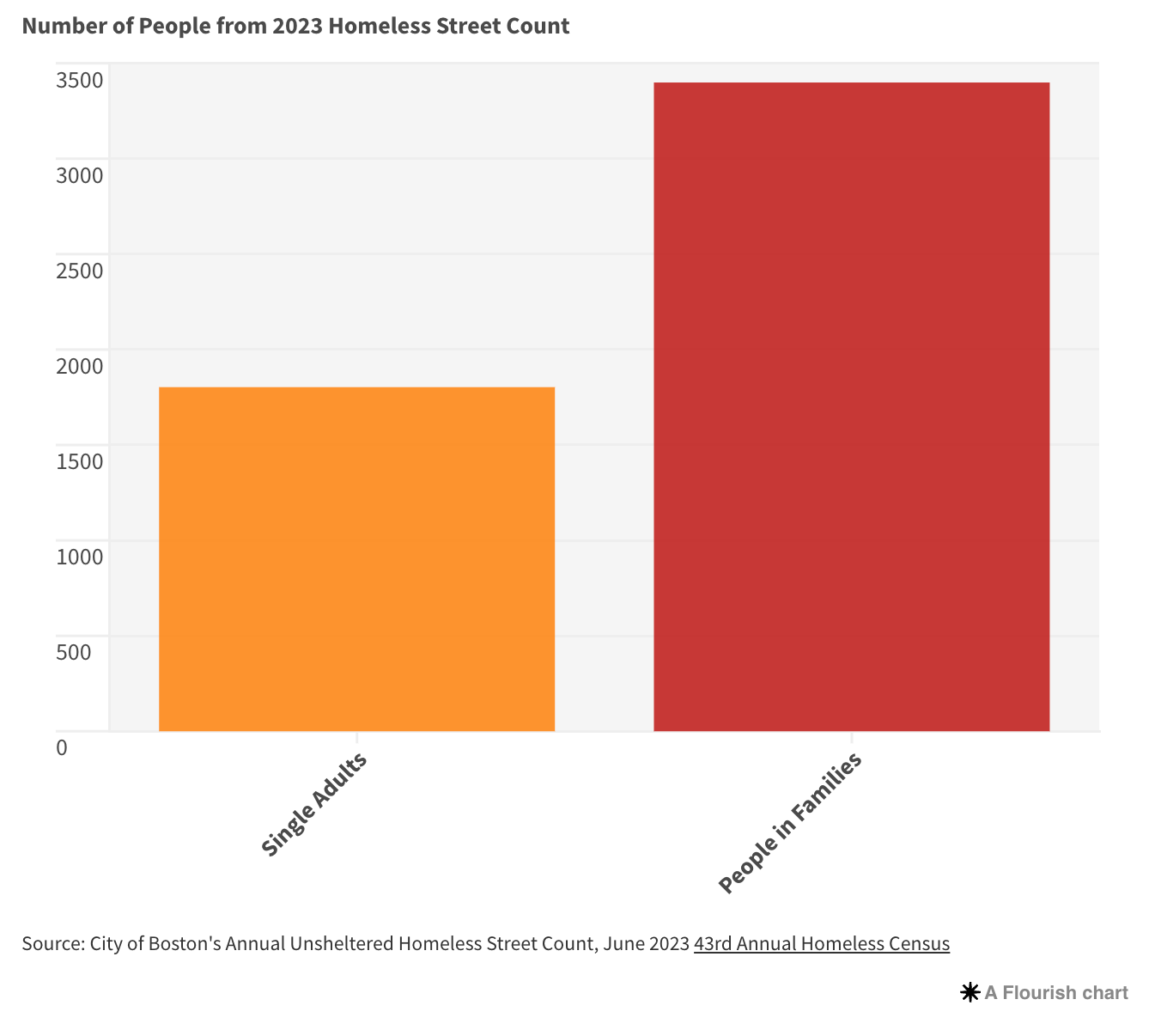
This was my first story with a whistleblower source. The real waitlist numbers gave me a factual backbone I could report the human stories against, instead of the other way around. I learned how to protect a sensitive source while still using their information to hold an agency's public statements accountable.
Context
Reporting duration: two weeks, as part of BU's Statehouse reporting program
Solo project: reporting, interviewing, and data visualization
I learned how to interview through a translator without losing the specificity that makes an anecdote land, asking follow-ups precise enough that nothing got smoothed over in translation.